
Cohere Pivots to the Edge with 'Tiny Aya,' Targeting the Global South and IPO Ambitions
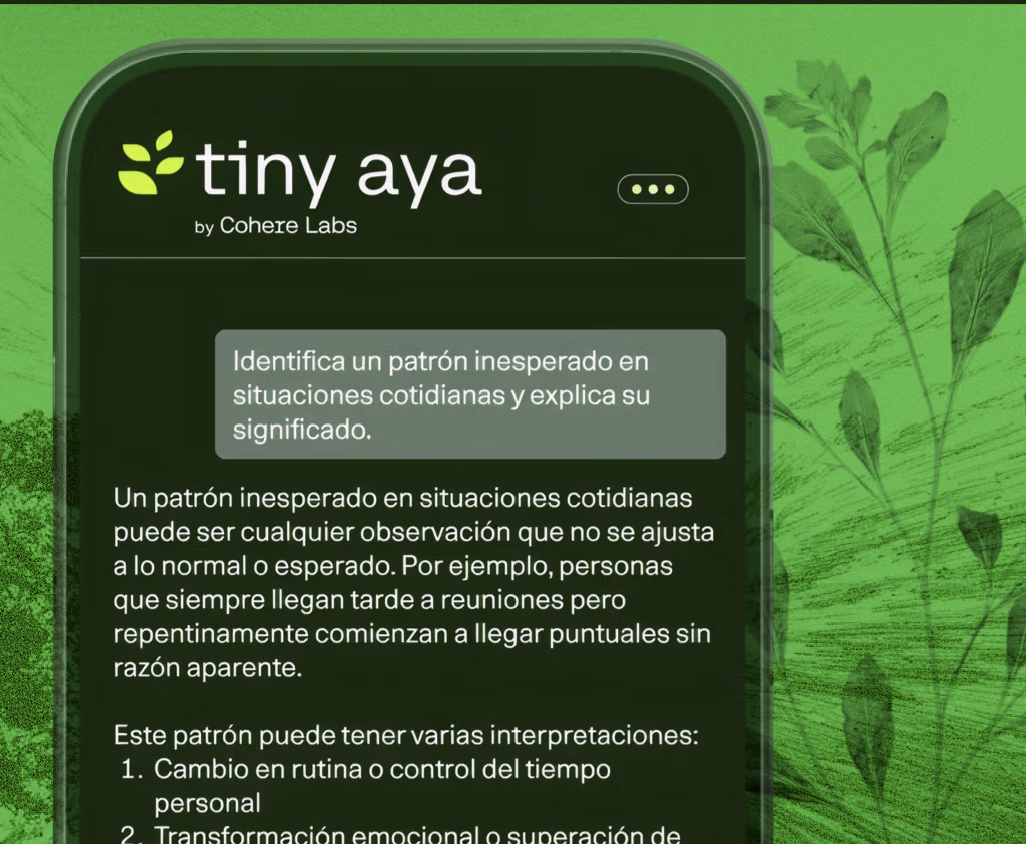
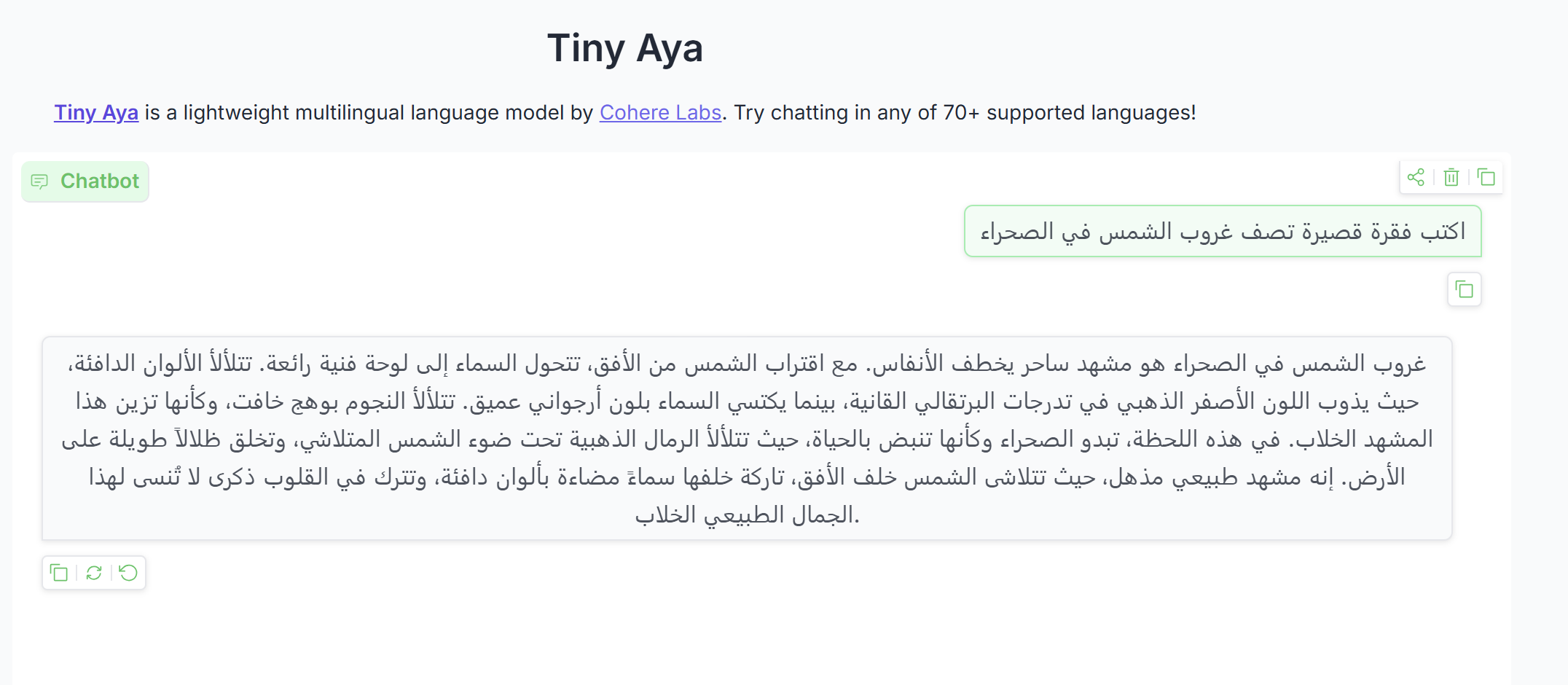
Cohere launched Tiny Aya, a 3.35B open-weight multilingual (70+ languages) model family optimized for offline, on-device use, including global and region-specialized variants for South Asia, Africa, and Asia-Pacific/West Asia/Europe.
Enterprise AI startup Cohere Inc. unveiled a new family of lightweight, multilingual artificial-intelligence models on Tuesday, a strategic move designed to capture the burgeoning demand for offline AI in emerging markets as the company readies itself for a potential public offering.
At the India AI Summit, the Toronto-based company introduced "Tiny Aya," a suite of open-weight models optimized to run on local devices such as laptops without internet connectivity. The launch marks a departure from the industry’s obsession with massive, cloud-dependent models, positioning Cohere to compete for enterprise clients in regions where bandwidth is scarce and data privacy is paramount.
The release comes as Cohere solidifies its financial standing. The company reportedly closed 2025 with $240 million in annual recurring revenue (ARR), fueled by a 50% quarter-over-quarter growth rate, according to investor documents reviewed by CNBC. With Chief Executive Aidan Gomez signaling plans to go public "soon," the expansion into the "Global South" appears to be a key pillar of Cohere’s pre-IPO growth narrative.
Cracking the Connectivity Barrier
The core of the Tiny Aya line is a 3.35-billion-parameter base model, significantly smaller than the trillion-parameter giants from competitors like OpenAI and Google. This efficiency allows the models to function on standard hardware, a critical feature for the Indian and African markets where consistent high-speed internet remains a challenge for many businesses.
"This approach allows each model to learn stronger linguistic foundations and cultural nuances," a Cohere representative said at the summit.
To address the linguistic fragmentation of these markets, Cohere released three region-specific variants alongside a global version:
- TinyAya-Fire: Tailored for South Asia, covering languages such as Hindi, Bengali, Tamil, and Marathi.
- TinyAya-Earth: Designed for African languages.
- TinyAya-Water: Focused on the Asia-Pacific and European regions.
The models were trained on a relatively modest cluster of 64 Nvidia H100 GPUs, highlighting a shift toward capital-efficient development—a metric likely to appeal to Wall Street investors scrutinizing the exorbitant capital expenditures of AI firms.
The Race for the Edge
Cohere’s pivot to "edge AI"—processing data locally on devices rather than in the cloud—addresses two major hurdles for enterprise adoption: latency and privacy. By enabling offline translation and local app development, Cohere is betting that the next wave of AI growth will come from practical, on-the-ground applications in manufacturing, logistics, and retail in developing economies.
The move intensifies competition with Google and Meta Platforms, both of which have courted developers in India with their own multilingual tools. However, Cohere’s decision to open-source the base code (available via HuggingFace and Kaggle) aims to entrench its technology within the developer communities of the Global South.
Financial Headwinds and IPO Talk
Cohere’s aggressive product expansion is underpinned by robust financials. The reported $240 million ARR for 2025 represents a significant milestone for the Nvidia-backed startup, which has sought to differentiate itself by focusing strictly on enterprise clients rather than consumer chatbots.
As the window for tech IPOs widens in 2026, Cohere’s ability to monetize these new markets while maintaining its efficiency metrics will be closely watched. The Tiny Aya launch suggests the company is looking beyond the saturated U.S. market to sustain the high-growth trajectory required for a successful public debut.
Sources
- Launch Details & Technical Specs: Bitcoin World, Dataconomy, FindArticles (Feb. 17, 2026) – Confirmed the release of TinyAya-Global, Fire, Earth, and Water variants, the 3.35B parameter size, and the focus on offline capability at the India AI Summit.
- Financial Data: CNBC (via Seeking Alpha and GuruFocus, Feb. 13, 2026) – Reported the $240 million ARR figure, 50% quarterly growth, and IPO speculations.
- Strategic Context: The Tech Buzz (Feb. 17, 2026) – Analysis of Cohere’s "edge AI" strategy vs. OpenAI and Google.