AI Medical Translation Startup No Barrier Closes $2.7 Million Seed Round
Healthcare VCs Back Real-Time Interpretation Platform Now Serving 100+ Medical Facilities Across 12 States
No Barrier, a startup developing AI-powered real-time medical interpretation services for patients with limited English proficiency, has closed a $2.7 million seed funding round on November 17. The investment was co-led by healthcare-focused venture capital firms A-Squared Ventures, Esplanade Ventures, Rock Health Capital, and Fusion. This funding signals the growing recognition of AI technology as a viable solution for addressing healthcare access disparities created by language barriers in multicultural societies.
26 Million Americans Face Healthcare Disparities Due to Language Barriers
Approximately 26 million U.S. residents have limited English proficiency, representing roughly 8% of the total population. This demographic is particularly concentrated among Hispanic, Asian, and Middle Eastern immigrant communities. According to health research organization KFF, patients facing language barriers are significantly more likely to rate their physical health as "fair" or "poor" compared to English-proficient individuals.
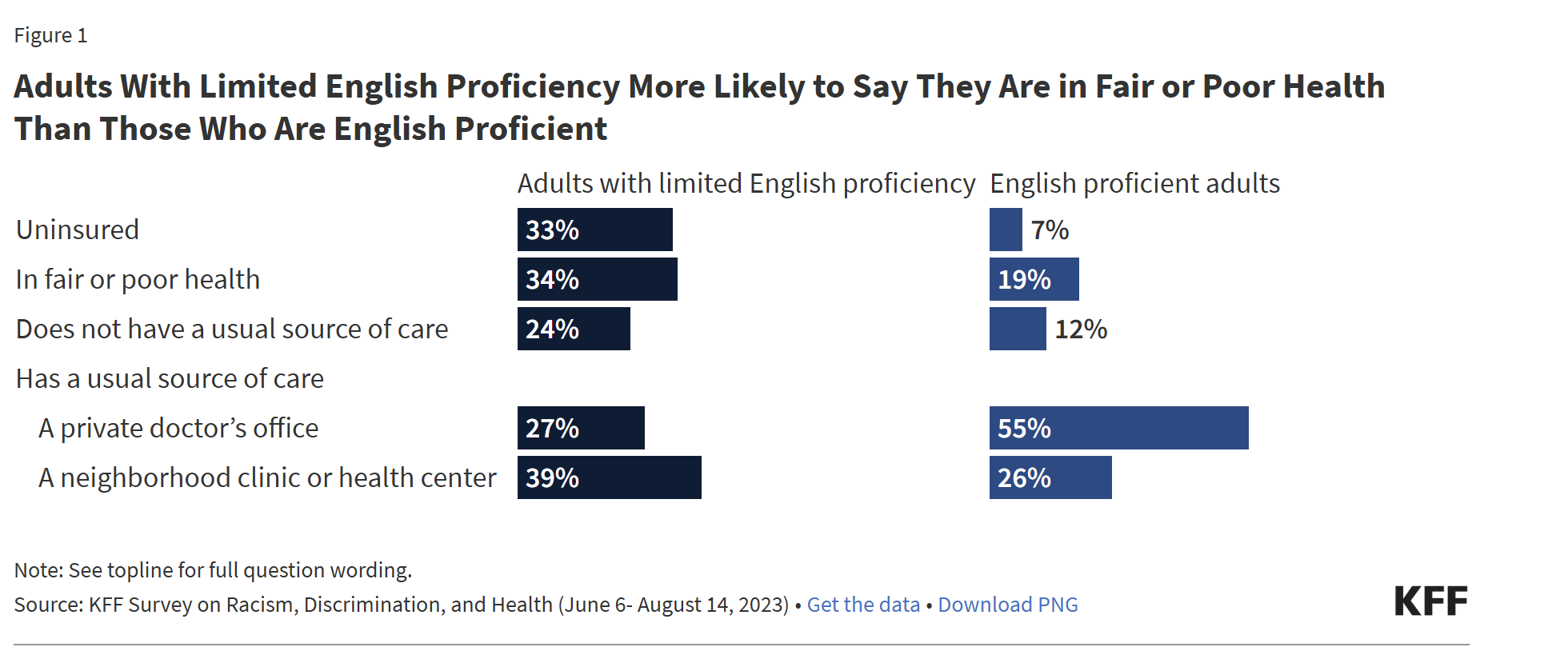
Language barriers extend far beyond mere communication inconvenience—they directly translate into diminished healthcare quality. When patients cannot accurately describe their symptoms or fully understand their diagnosis and prescriptions, the consequences can be severe: misdiagnosis, medication errors, and delayed treatment. In emergency situations, language barriers can become a matter of life and death. The U.S. healthcare industry has witnessed a steady stream of medical malpractice cases stemming from interpretation failures, representing substantial legal and financial risks for healthcare institutions.
The market for language services addressing these healthcare disparities is expanding rapidly. According to a Kent State University report, the global language services market is projected to grow from $76.8 billion in 2025 to $98.1 billion by 2028. The medical sector, requiring precision and specialized expertise, represents a high-value interpretation market segment where AI technology adoption is expected to drive the most significant transformation.
The Limitations of Current Medical Interpretation Systems
Current interpretation services in U.S. healthcare facilities generally fall into three categories: professional medical interpreters employed by or contracted to hospitals; remote interpretation services via phone or video; and informal interpretation by patients' family members or acquaintances.
Professional medical interpreters deliver the most accurate interpretation but come with high costs, and for certain languages, finding qualified interpreters can be extremely challenging. Remote interpretation services offer greater accessibility but involve wait times and limit non-verbal communication. Family interpretation eliminates cost concerns but raises serious issues: lack of medical terminology expertise, patient privacy violations, and no guarantee of interpretation accuracy.
No Barrier co-founder and CEO Eyal Heldenberg pointed to these structural problems in existing systems. According to Heldenberg, when patients cannot speak English, simply arranging for an interpreter requires considerable time and administrative procedures. In busy outpatient settings, such delays significantly reduce clinical efficiency. When interpreters are unavailable, family members must step in, exposing patients' sensitive medical information to relatives.
Even with professional interpreters present, fundamental time delays remain unresolved. The doctor speaks, the interpreter listens, considers the most appropriate phrasing, delivers the message to the patient, then receives the patient's response and relays it back to the doctor. This process typically doubles or triples standard consultation times, causing fatigue for both physicians and patients.
"Putting the Human Brain into Software"
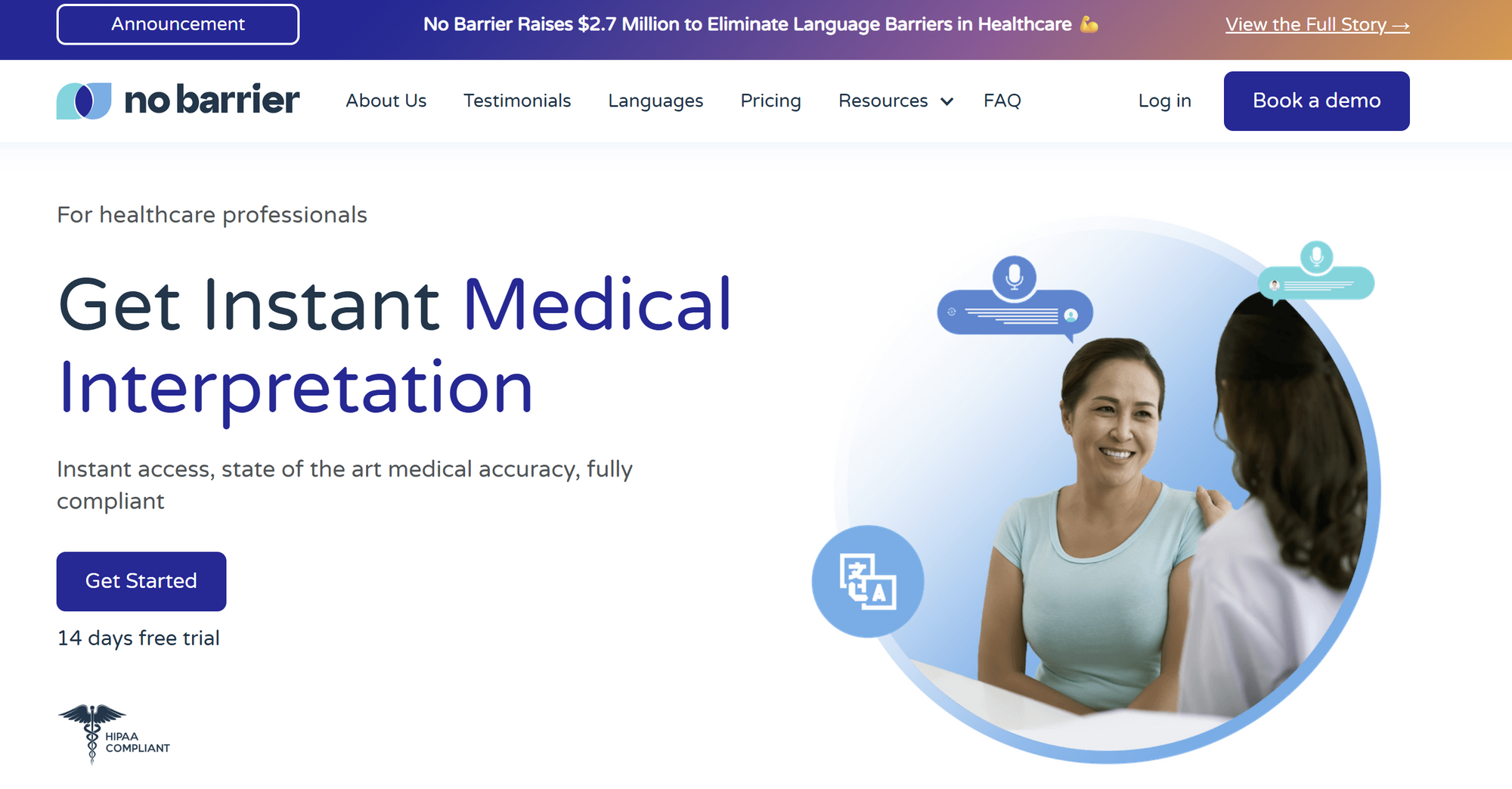
No Barrier aims to solve these challenges through AI technology. The company's platform is HIPAA-compliant and currently serves over 100 healthcare facilities across 12 U.S. states. It provides real-time interpretation in more than 40 languages, including Spanish, Mandarin Chinese, and Arabic.
The platform's core technology goes beyond simple machine translation to replicate the role of human interpreters in software. Heldenberg described this as "taking the human brain and putting it in a piece of software." Specifically, the platform features several distinctive capabilities.
First, a real-time speech-to-speech pipeline enables instantaneous interpretation. By converting directly from audio to audio without intermediate text processing, natural conversational flow is maintained. Second, the system accounts for language-specific contexts. In languages such as Spanish, Arabic, and Hebrew, grammar and expressions vary by gender, and No Barrier's technology reflects these linguistic characteristics. Third, like human interpreters, the system proactively requests clarification. When it fails to accurately capture critical medical information such as medication names or dosages, it pauses the conversation to ask, "Could you repeat the medication name?"
These features aim to achieve the accuracy and reliability levels required for practical use in medical settings, where even minor errors can directly impact patient health and safety.
Expanding Beyond the Exam Room to the Entire Healthcare Journey
The company's long-term vision extends beyond face-to-face consultations to eliminate language barriers throughout the entire healthcare experience. Heldenberg noted the multiple touchpoints patients encounter during hospital visits. Typically, patients pass through four to five distinct contact points: the reception desk, nurse consultations, physician examinations, and imaging or laboratory services. Language barriers can arise at each stage, necessitating a system capable of providing consistent solutions throughout.
No Barrier plans to expand its services beyond in-person consultations to encompass telehealth, medical document translation, hospital websites, chat support, consent form signing, and patient education materials. The goal is to help hospitals and healthcare networks establish accurate, safe, and compliant multilingual communication layers across all patient touchpoints.
However, technological limitations remain for certain languages and situations. Heldenberg acknowledged that American Sign Language cannot currently be supported due to its essential visual components. Nevertheless, he emphasized that AI interpretation can serve as a sufficiently practical solution for the majority of spoken languages and most medical situations.
Key Issues Surrounding AI Medical Interpretation
As AI medical interpretation technology proliferates, several important issues have come to the forefront.
The first concerns accuracy and liability. Errors in medical interpretation can directly affect patient lives. With human interpreters, liability for medical incidents caused by mistranslation is relatively clear-cut, but for AI interpretation, legal standards remain undefined regarding whether responsibility falls on the technology provider, healthcare institution, or medical staff. This issue intersects with broader regulatory discussions surrounding AI medical technology.
The second issue involves data privacy and security. Medical conversations contain patients' most sensitive personal information. While No Barrier emphasizes HIPAA compliance, transparency is required regarding how AI systems process and store conversation data for learning and improvement purposes. Cloud-based services, in particular, may raise concerns about data breach risks.
The third issue relates to the impact on human interpreter employment. Advances in AI interpretation technology will inevitably affect the existing medical interpreter market. Some predict that AI will complement rather than completely replace human interpreters. For instance, a hybrid model is possible where AI handles routine interpretation tasks while human interpreters intervene in complex or sensitive situations. However, as healthcare institutions pursue cost reduction, demand for human interpreters could decline once AI interpretation reaches sufficiently reliable levels.
The fourth issue concerns cultural nuance and non-verbal communication limitations. Language interpretation involves more than converting words into another language—it requires conveying cultural context and non-verbal cues. In medical settings especially, patients' cultural backgrounds can significantly influence their perception of illness, attitudes toward treatment, and communication styles with physicians. Whether AI can perfectly handle such cultural nuances remains to be verified.
"Mass Adoption Expected Within 3-4 Years"
Despite these challenges, Heldenberg offered an optimistic outlook on the future of AI medical interpretation technology. He projected mass adoption within the next three to four years, anticipating that technological advancement will drive costs down while improving accessibility and strengthening privacy protections.
Considering the overall growth trajectory of the medical AI market, such projections appear realistic. Healthcare institutions face pressure to improve efficiency and reduce costs while simultaneously meeting demands for enhanced service quality across diverse patient populations. AI interpretation technology holds the potential to address both challenges simultaneously.
"We are eager to see the market dynamics here and see the adoption around these technologies," Heldenberg said, suggesting that the convergence of technological advancement and market demand will bring significant change to the medical interpretation field.
Implications for Global Healthcare Technology Markets
The No Barrier case offers significant implications for healthcare technology companies worldwide. First, medical device and digital healthcare companies considering U.S. market entry must treat multilingual support as an essential feature. With 26 million limited-English-proficiency individuals in the United States, multilingual capabilities can substantially determine product market accessibility.
Second, the medical interpretation market for Asian languages, including Korean, Chinese, and Vietnamese, shows considerable growth potential. The Korean-American population alone numbers approximately two million, with a significant portion experiencing English communication difficulties. AI solutions specialized in Asian language medical interpretation, or market entry through partnerships with existing platforms, merit consideration.
Third, opportunities exist in developing AI medical interpretation technology itself. Countries with strong AI technology and medical IT capabilities can establish competitive advantages in interpretation technology for their native languages. Development of interpretation solutions targeting foreign patients, linked with expanding medical tourism markets, also represents a promising field.
As healthcare systems worldwide grapple with increasing diversity and the imperative to provide equitable care, AI-powered medical interpretation stands poised to become an essential component of modern healthcare infrastructure. No Barrier's successful funding round suggests that investors recognize this trajectory and are positioning themselves for what could become a transformative shift in how healthcare crosses language boundaries.

![[Global Tech Focus] "폐가 보내는 '반향(Resonance)'을 듣다"... 40달러 패치로 1억 원 CT 장비에 도전장](https://cdn.media.bluedot.so/bluedot.mediontech/2026/02/i8qvww_202602171233.png)